
The complete guide
The complete guide
Leather Fly Swatter: Why a Heavy Duty Flyswatter Built to Last Is Worth Every Swing
There is a world of difference between a flimsy plastic swatter that cracks and bends after a handful of uses and a leather fly swatter that feels solid in your hand and delivers a decisive strike every single time. A heavy duty flyswatter made from genuine leather is not just a pest control tool. It is a small investment in quality that pays off through years of reliable performance, satisfying weight, and a craftsmanship that turns a mundane household item into something you are genuinely pleased to own.
The leather insect swat has a long and distinguished history. Before the age of mass-produced plastics, fly swatters were made from the materials people trusted for durability and function, and leather was among the finest of those materials. Today, the leather fly swatter is experiencing a well-deserved revival as homeowners rediscover the advantages of natural materials, seek out products built to last a lifetime, and look for alternatives to the disposable plastic items that fill landfills after a few months of use. This guide explores what makes a leather flyswatter special, how to choose the right one, and why a heavy duty flyswatter belongs in every home that values quality.
What Makes a Leather Fly Swatter Different
Pick up a leather fly swatter and the difference is immediately obvious. The weight, the balance, the feel of the handle, and the satisfying firmness of the striking pad all communicate quality in a way that plastic simply cannot replicate. But the differences go deeper than first impressions. The material properties of leather give it genuine functional advantages that make it a superior swatting tool, not just a more attractive one.
The Natural Qualities of Leather as a Swatting Material
Leather possesses a unique combination of firmness and flexibility that makes it ideal for striking flying insects. A leather swatter head is stiff enough to deliver a decisive blow but supple enough to conform to uneven surfaces on contact. When you bring a leather insect swat down on a fly sitting on a textured wall, a woven tablecloth, or a curved lamp shade, the leather moulds to the surface contour and makes contact across the entire striking area. Plastic swatter heads are rigid and bounce off uneven surfaces, often stunning the insect rather than finishing the job. Leather maintains contact for a fraction of a second longer, which makes all the difference in ensuring a clean result.
Leather also dampens the impact sound compared to plastic. A plastic swatter cracks sharply against a hard surface, which can be startling in a quiet room and leaves a ringing sound that lingers. A leather fly swatter produces a softer, more muted sound on contact, a solid thud rather than a sharp crack. This quieter strike is particularly welcome in bedrooms, offices, and any space where a loud crack would be disruptive.
Durability That Outlasts Every Alternative
A well-made leather fly swatter does not wear out in the conventional sense. Leather is naturally resistant to cracking, splitting, and fatigue from repeated flexing. Where a plastic swatter becomes brittle with age and UV exposure, eventually snapping at the junction between head and handle, leather actually improves over time. The material develops a patina, softens slightly with use, and becomes more supple without losing its structural integrity. A leather insect swat purchased today can still be in active service a decade or more from now, looking better with age rather than worse.
The stitching and construction of a quality leather swatter also contribute to its longevity. Reinforced seams, riveted handle connections, and double-layered striking pads resist the stress of thousands of impacts without separating or loosening. Compare this to the thin injection-moulded plastic hinge on a budget swatter that fails after a season of use, and the long-term value of leather becomes clear.
Anatomy of a Quality Heavy Duty Flyswatter
Not every leather fly swatter is built to the same standard. Understanding the components and construction details that define a truly heavy duty flyswatter helps you distinguish a well-crafted tool from a decorative imitation that looks the part but does not perform under sustained use.
The Striking Pad
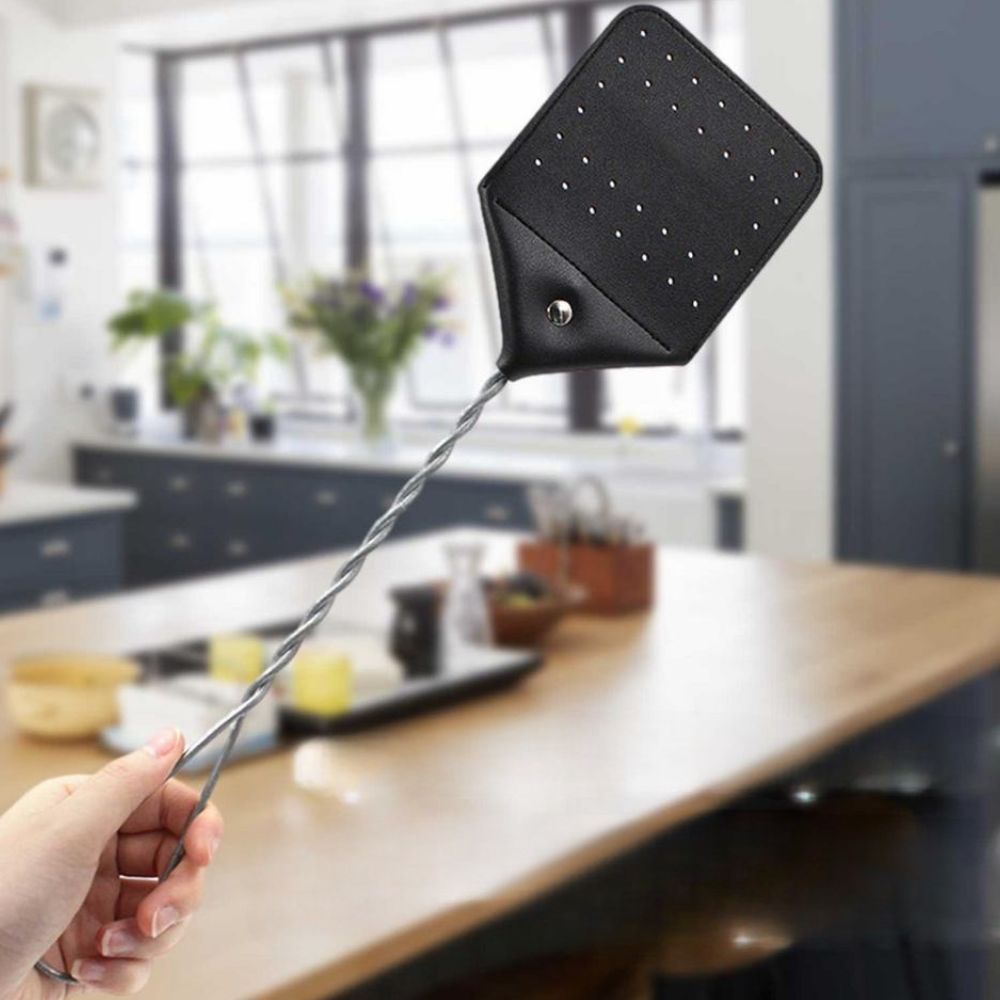
The striking pad is the flat leather section that makes contact with the insect. On a quality leather fly swatter, this pad is cut from firm, vegetable-tanned leather thick enough to deliver a solid strike without folding or bending on impact. The best pads use a double layer of leather stitched or riveted together for extra weight and rigidity. This added mass gives the swatter a satisfying heft that carries through the swing and delivers more force at the point of contact, improving your success rate against larger and faster insects.
The shape of the pad varies between models. Traditional leather swatters often feature a rectangular or shield-shaped pad, while modern designs may use an oval or teardrop shape that provides a more aerodynamic profile through the swing. Regardless of shape, the pad should be large enough to provide a generous target zone without being so large that it creates excessive air resistance. A pad measuring roughly 100 to 130 millimetres across the widest point hits the sweet spot between coverage and speed.
The Handle
A heavy duty flyswatter needs a handle that is comfortable to grip, long enough to provide reach, and rigid enough to transfer your swing energy efficiently to the striking pad. Leather fly swatter handles come in several styles, each with its own character and advantages.
Solid wooden handles offer a classic look and firm, unyielding rigidity that delivers maximum force to the pad on every swing. Hardwoods like oak, ash, and hickory are popular choices because they combine strength with a comfortable weight. Leather-wrapped wire handles provide flexibility and a whip-like action that accelerates the pad to high speed, making them excellent for fast, reactive swats at quick-moving insects. Braided leather handles fall somewhere between the two, offering moderate flexibility with a tactile grip that improves with use as the leather moulds to the shape of your hand.
The Connection Point
Where the handle meets the striking pad is the point of greatest stress during use, and how this junction is constructed determines the swatter’s long-term durability. Premium leather fly swatters use rivets, metal fasteners, or heavy-duty saddle stitching at this junction to create a connection that resists the pulling and twisting forces generated by thousands of swings. Some designs extend the handle material into the pad itself, sandwiching it between the leather layers for a seamless connection that distributes stress over a wide area rather than concentrating it at a single point.
Hanging Loops and Storage Features
Most leather fly swatters include a hanging loop at the end of the handle, either as a leather thong, a metal ring, or a hole drilled through the handle end. This small feature is surprisingly important because it encourages proper storage on a hook where the swatter hangs freely, keeping the pad straight and the handle uncompressed. A leather insect swat stored lying flat under other objects can develop a curve in the pad or a bend in the handle over time. Hanging storage prevents this and keeps the swatter in its optimal striking shape.
Types of Leather Used in Fly Swatters
The type of leather used in a fly swatter significantly affects its feel, performance, and longevity. Several varieties are common, and each brings different characteristics to the finished product.
Full-Grain Leather
Full-grain leather is the highest quality leather available, made from the outermost layer of the hide with the natural grain pattern intact. It is the strongest and most durable type of leather, resistant to moisture and wear, and it develops a rich patina over time that deepens its colour and enhances its appearance. A leather fly swatter made from full-grain leather represents the premium end of the market and offers the longest service life and the most satisfying feel in the hand. The natural grain surface also provides a slight texture that helps the pad grip the surface on contact rather than sliding or bouncing, which improves strike effectiveness.
Top-Grain Leather
Top-grain leather has been sanded or buffed to remove natural imperfections, resulting in a smoother, more uniform appearance than full-grain. It is slightly thinner and more flexible, which some users prefer for the way it conforms to surfaces during a strike. Top-grain leather is still highly durable and develops a patina over time, though it may not age quite as dramatically as full-grain. For a heavy duty flyswatter that balances performance with a polished appearance, top-grain leather is an excellent choice.
Bridle Leather and Harness Leather
Bridle leather and harness leather are specific types of leather originally produced for equestrian equipment. They are heavily waxed and treated during the tanning process to create an exceptionally tough, weather-resistant material that stands up to extreme use. These leathers are stiffer than standard varieties, which gives the swatter pad extra firmness and striking authority. A leather insect swat made from bridle or harness leather feels more substantial in the hand and delivers a noticeably firmer impact than one made from softer leather types. For anyone who wants the absolute toughest, most uncompromising heavy duty flyswatter available, these equestrian-grade leathers are the material of choice.
Bonded Leather and Imitation Alternatives
Bonded leather is a composite material made from leather scraps and fibres bonded together with adhesive. While it looks like leather at first glance, it lacks the strength, flexibility, and longevity of genuine leather. Bonded leather pads are prone to peeling, cracking, and delaminating after moderate use, particularly under the repeated impact stress that a fly swatter endures. Similarly, vinyl and faux leather alternatives may look presentable when new but degrade quickly and lack the functional properties that make real leather such an effective swatting material. If you are investing in a leather fly swatter for its durability and performance, ensure the product uses genuine leather rather than bonded or imitation substitutes.
Why Choose a Heavy Duty Flyswatter Over a Standard Model
Standard flyswatters from the supermarket shelf do their job acceptably for a short period, then they fail. A heavy duty flyswatter costs more initially but delivers better performance from the first swing and continues delivering that performance for years or even decades. The case for upgrading is both practical and philosophical.
Consistent Performance Over Time
A standard plastic swatter performs at its best the day you buy it, and it is all downhill from there. UV exposure, repeated use, and material fatigue gradually degrade its flexibility, strength, and effectiveness until it cracks, bends, or breaks. A heavy duty leather flyswatter performs consistently throughout its entire lifespan. The leather pad does not become brittle. The handle does not develop stress fractures. The construction does not loosen with age. You get the same solid, reliable swing on the thousandth use as you did on the first.
Environmental Responsibility
Every plastic fly swatter that breaks and gets thrown away contributes to the growing problem of plastic waste. Over a lifetime of insect control, a household might go through dozens of cheap plastic swatters, each one adding to landfill. A single leather fly swatter that lasts for ten, fifteen, or even twenty years replaces all of those disposable plastic products with one durable item made from a natural, biodegradable material. Choosing a heavy duty flyswatter made from leather is a small but meaningful step toward reducing personal plastic consumption and supporting a more sustainable approach to the everyday objects we use in our homes.
A Better Experience With Every Use
There is a tactile pleasure in using a well-made tool that a cheap disposable item simply cannot provide. The weight of a leather fly swatter in your hand, the smooth grip of a quality handle, the solid thump of the pad connecting with its target, all of these sensory details contribute to an experience that is measurably more satisfying than waving a flimsy piece of plastic at a fly. This might seem like a minor point, but the satisfaction of using a quality tool encourages consistent use, which means insects in your home are dealt with promptly rather than tolerated because reaching for the swatter feels like a chore.
Caring for Your Leather Insect Swat
Leather is a natural material that responds well to simple, regular care. A few maintenance habits keep your leather fly swatter in top condition and ensure it delivers peak performance for as long as you own it.
Cleaning After Use
Wipe the striking pad with a clean cloth after each use to remove insect residue before it dries. Fresh residue comes off easily with a dry or slightly damp cloth, while dried residue may require a cloth dampened with a small amount of mild soap solution. Avoid soaking the leather or using harsh chemical cleaners, as these can strip the natural oils from the material and cause it to dry out, stiffen, and eventually crack. For stubborn marks, a dedicated leather cleaner applied sparingly with a soft cloth works effectively without damaging the surface.
Conditioning the Leather
Leather dries out gradually over time, particularly in warm or low-humidity environments. Applying a leather conditioner once or twice a year keeps the material supple, flexible, and resistant to cracking. Use a conditioner specifically formulated for the type of leather your swatter is made from. Apply a thin, even coat to the pad and any leather sections of the handle, let it absorb for 15 to 20 minutes, then buff away any excess with a clean cloth. Conditioning not only preserves the leather’s functional properties but also deepens its colour and enhances the patina that develops with age, keeping your leather insect swat looking distinguished rather than neglected.
Proper Storage
Store your leather fly swatter hanging from its loop on a hook in a dry, well-ventilated location away from direct sunlight and heat sources. Prolonged exposure to direct sun fades the leather colour and accelerates drying, while excessive heat can cause the material to shrink and distort. Avoid storing a leather swatter in sealed plastic bags or containers where moisture cannot escape, as trapped humidity can promote mould growth on the leather surface. A simple hook on the inside of a pantry door, the side of a kitchen cabinet, or a utility room wall provides ideal storage that keeps the swatter accessible, properly shaped, and well ventilated.
The Leather Fly Swatter as a Kitchen Classic
The kitchen is where the fly swatter sees more action than anywhere else in the home. Food preparation attracts flies, open windows bring them inside, and the warm, aromatic environment of a busy kitchen is irresistible to every flying insect in the vicinity. A leather fly swatter is perfectly suited to this environment and has earned its place as a kitchen essential in households that value both function and character.
Why Leather Suits the Kitchen
Kitchens demand tools that can handle moisture, heat, and frequent cleaning without deteriorating. Leather, particularly well-conditioned leather, handles all of these conditions comfortably. It does not crack in the warmth near the stove, does not absorb odours the way some synthetic materials do, and cleans up quickly after each use. The natural aesthetic of leather also complements kitchen environments where natural materials like wood, stone, and copper set the design tone. A leather fly swatter hanging beside the stove or on a hook near the back door looks like it belongs there in a way that a neon plastic swatter never will.
A Thoughtful Gift and Heirloom Item
A quality leather fly swatter makes a surprisingly well-received gift, particularly for anyone who has recently moved into a new home, enjoys cooking, or appreciates well-crafted household tools. It sits in the category of thoughtful, practical gifts that people would not typically buy for themselves but are delighted to receive. The durability of leather means a fly swatter gifted today could still be in use decades from now, acquiring character and memories with each passing year. Some families pass leather household tools down through generations, and a heavy duty leather flyswatter with decades of patina is exactly the kind of humble, enduring object that carries stories with it.
Comparing Leather Fly Swatters to Other Heavy Duty Options
Leather is not the only material used in heavy duty flyswatters. Several alternatives offer their own version of durability and premium performance, and understanding how they compare to leather helps you make an informed choice.
Rubber and Silicone Heavy Duty Swatters
Rubber and silicone swatter heads are virtually indestructible and extremely easy to clean. They provide excellent surface conformity on contact and a slight tackiness that helps secure the strike. However, they lack the aesthetic warmth and ageing character of leather, and their synthetic appearance does not blend as naturally into kitchen and living room environments. For purely functional heavy duty use in workshops, garages, and outdoor settings where appearance is secondary, rubber and silicone models perform admirably. For spaces where the swatter is visible and contributes to the room’s character, leather remains the superior choice.
Metal Mesh and Wire Heavy Duty Swatters
Metal mesh swatters, particularly those made from stainless steel or brass mesh, offer exceptional durability and a distinctive industrial aesthetic. They deliver a firm, unyielding strike that is effective against large and robust insects. The downside of metal mesh is that it can scratch and mark surfaces on contact, and the rigid head does not conform to uneven surfaces the way leather or rubber does. Metal swatters also tend to be noisier on impact, producing a sharp metallic ring that some users find unpleasant. For general household use, leather offers a better balance of effectiveness, surface safety, and quiet operation.
Bamboo and Rattan Heavy Duty Swatters
Bamboo and woven rattan fly swatters are natural material alternatives that share some of leather’s aesthetic appeal. They are lightweight, renewable, and biodegradable, ticking many of the same sustainability boxes as leather. However, bamboo and rattan are more brittle than leather and can crack or splinter after sustained impact use. They are also more susceptible to moisture damage and insect attack on the swatter material itself. As decorative items and light-duty swatters, they have their charm. For anyone seeking a genuine heavy duty flyswatter that will survive years of active use, leather’s superior resilience gives it a clear advantage.
Finding the Right Leather Fly Swatter for Your Home
Choosing a leather fly swatter comes down to matching the material grade, handle style, and construction quality to your personal preferences and intended use. For a kitchen workhorse that will see daily action, prioritise a heavy duty flyswatter with a full-grain or bridle leather pad, a solid hardwood handle, and riveted construction at the junction point. For a living room or bedroom where quiet operation and refined appearance matter more, a top-grain leather pad with a braided leather handle offers elegance alongside effectiveness.
Regardless of the specific model you choose, any genuine leather fly swatter represents an upgrade over the disposable plastic alternatives that dominate the market. It strikes better, lasts longer, looks better, and feels better in your hand. It replaces a throwaway product with something built to endure. And on a purely practical level, it makes you more effective at the timeless household task of keeping flying insects out of your living space. A leather insect swat is one of those rare purchases where quality, sustainability, and everyday function align perfectly, delivering satisfaction with every swing for as long as you care to keep swinging.
Only logged in customers who have purchased this product may leave a review.